

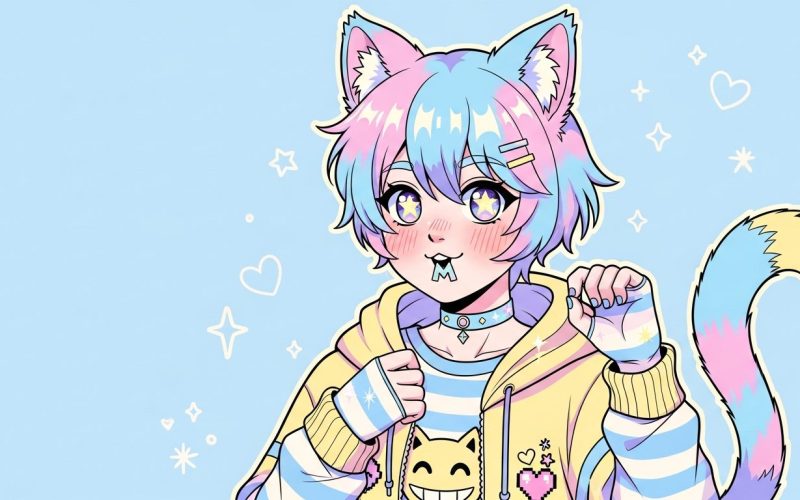
A catboy is a male character or person who adopts cat-like traits – think cat ears, a tail, playful mannerisms, and that signature “nya” energy. Originally rooted in anime and manga, catboys have clawed their way into mainstream internet culture, TikTok cosplay, and meme territory.
What catboy actually means
Meaning: A boy or male-presenting person with cat features, either fictional (anime, games) or as a real-world aesthetic (cosplay, fashion, online persona).
Also known as: neko boy, neko-dan, cat boi. The Japanese term nekomimi (cat ears) covers the broader trope.
In anime and games
Characters like Felix from Re:Zero or Schrodinger from Hellsing blend feline grace with human charm. They often challenge gender norms, mixing cute aesthetics with complex characterization.
On TikTok and socials
Real people rocking clip-on cat ears, drawing whiskers, adding “nya” to captions, and leaning into soft, playful energy. The catboy persona is popular in cosplay, e-boy culture, and queer spaces.
Where catboys come from
The catboy trope has deep roots in Japanese media. Nekomimi characters have appeared in manga since the 1960s, but the modern catboy archetype solidified in the 2000s through anime like Loveless and later Re:Zero. The appeal is the blend of independence (cats do what they want) with approachability (cute, soft, non-threatening).
Western internet culture grabbed the concept around 2018-2020, when TikTok creators started adopting the aesthetic. Elon Musk tweeting “catgirls are real” only boosted the discourse, and catboys rode the same wave.
Why catboys hit different online
- Gender expression: Catboys often blur the line between masculine and feminine, making them a favorite in LGBTQ+ communities and among people exploring gender fluidity.
- Soft aesthetic: In a world of hard-edged internet culture, the catboy vibe is deliberately gentle – pastel colors, playful poses, whisker face paint.
- Meme power: “I want a catboy boyfriend” became a whole genre of post. The yearning is half-ironic, half-genuine, and entirely relatable to a certain corner of the internet.
Catboy vs. catgirl
Catgirls (nekomimi) have been mainstream longer, appearing in everything from Tokyo Mew Mew to Twitch emotes. Catboys occupy a slightly more niche but rapidly growing lane. The key difference is cultural weight – catboys tend to carry more deliberate gender subversion (overlapping with the sad boi aesthetic), while catgirls are a more established anime staple.
The catboy starter pack
- Clip-on or headband cat ears (black or matching hair color)
- Choker or bell collar
- Oversized hoodie or cropped top
- Drawn-on whiskers and nose
- The attitude: playful, a little mischievous, unapologetically cute
When to use “catboy” in conversation
- Use it to describe anime characters with cat features, TikTok cosplayers rocking the look, or the broader aesthetic.
- Use it affectionately – it is almost always a positive or playful term.
- Be mindful that in some contexts it overlaps with gender identity expression. Respect how people self-identify.