
The Sad Boi Guide
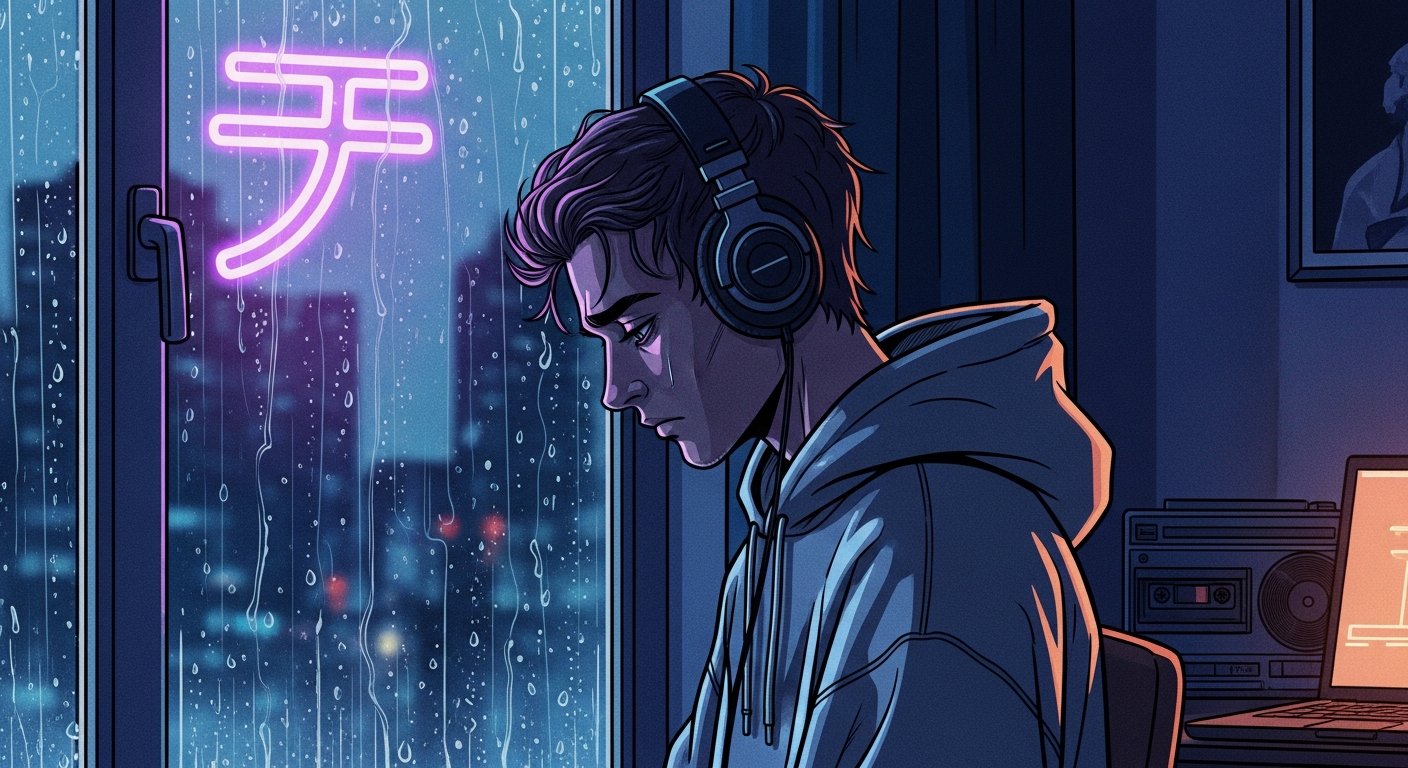
A sad boi (or sad boy) is someone - usually a young man - who leans into melancholy as an aesthetic and identity. Think lo-fi beats, rainy window selfies, existential captions, and a playlist that is 90% heartbreak. It is emotional vulnerability packaged as a vibe, and the internet has turned it into both a sincere movement and an endlessly memeable archetype.
What sad boi means
Meaning: A boy or man who openly embraces sadness, emotional sensitivity, and introspection - both as genuine expression and as an aesthetic choice. Spelling note: "Sad boi" (with the intentional misspelling) carries internet-culture energy. "Sad boy" is more neutral. Both are used interchangeably.Sincere use
"He's such a sad boi, always writing poetry at 2 AM"
"Sad boi hours hit different when it rains"
Meme use
"Entered my sad boi era after she left me on read"
"Sad boi starter pack: Cigarettes After Sex playlist + hoodie"
Where sad boi culture comes from
The sad boy aesthetic has multiple origin points:- Yung Lean and Sad Boys: The Swedish rapper and his crew (Sad Boys Entertainment, formed around 2012-2013) were among the first to brand sadness as an entire musical and visual identity. Vaporwave visuals, Arizona iced tea cans, and cloud rap beats defined the early era.
- Emo and post-emo: The 2000s emo wave (My Chemical Romance, Dashboard Confessional) normalized boys being openly emotional in music. Sad boi culture is partly emo's digital-native successor.
- Lo-fi hip hop: The "lofi hip hop radio - beats to relax/study to" YouTube streams became a visual and sonic anchor for sad boi energy - that anime girl studying in the rain is basically the patron saint of the movement.
- Internet confessional culture: Tumblr, then Twitter, then TikTok made it normal to post your feelings publicly. Sad boi culture lives in that space.
The sad boi aesthetic
Visual
- Oversized hoodies, beanies
- Muted, desaturated color palettes
- Rain, night shots, empty streets
- Lo-fi and vaporwave imagery
Sonic
- Lo-fi hip hop, bedroom pop
- Artists: Joji, Cigarettes After Sex, Lana Del Rey, Bon Iver
- Late-night playlist energy
- ASMR rain sounds as background
Sad boi vs. soft boi vs. eBoy
These archetypes overlap but hit different:- Sad boi: Leads with emotion. The sadness is the point - whether genuine or performative.
- Soft boi: Leads with gentleness. Less about sadness, more about tenderness and openness.
- eBoy: Leads with aesthetics. The look is the point - edgy fashion, heavy online presence.
The two sides of sad boi culture
There is a genuine tension in sad boi discourse:- The good: It normalizes emotional expression for young men in a culture that often tells them to bottle it up. Talking about feelings, even wrapped in memes, is healthier than silence.
- The critique: Some "sad bois" weaponize vulnerability - using emotional openness to manipulate, guilt-trip, or create a persona without doing the actual work of emotional growth. The line between genuine sensitivity and performative sadness is not always clear.
Sad boi hours
"Sad boi hours" is a specific time - usually late at night - when the melancholy hits hardest. It is when the sad boi posts go up, the playlists come out, and the group chat gets deep. If someone texts you "it's sad boi hours," they are either genuinely going through it or they just heard a song that made them feel something. Either way, check on them.When to use sad boi
- Use it to describe the aesthetic, the music, or the mood - "sad boi playlist," "sad boi energy."
- Use it self-awarely when you are in your feelings.
- Be thoughtful about using it to dismiss someone's actual emotions. If someone is genuinely struggling, "you're just being a sad boi" is not helpful.
TL;DR A sad boi is someone who embraces melancholy as both a genuine emotional state and an internet aesthetic. Rooted in Yung Lean's Sad Boys, emo culture, and lo-fi vibes, the archetype normalizes male emotional expression - sometimes sincerely, sometimes as a meme. Either way, it is a whole mood.