

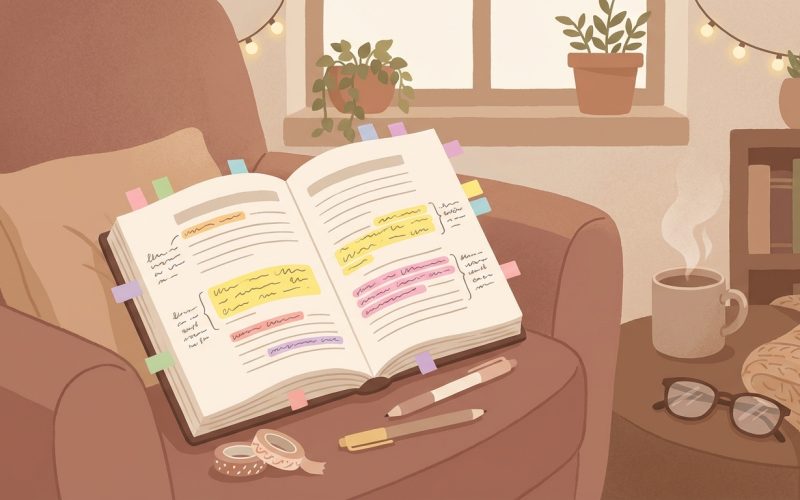
If you’ve been on BookTok lately, your feed is probably full of beautifully annotated book pages — color-coded tabs, margin notes in perfect handwriting, highlighted passages that look like abstract art. It’s gorgeous. It’s aspirational. And it’s making some readers furious.
What’s happening
The annotated pages trend involves readers documenting their annotation process on TikTok — showing off how they mark up books with highlights, sticky notes, underlines, and handwritten reactions in the margins. The aesthetic is meticulous: coordinated tab colors, neat handwriting, artistic layouts.
Videos tagged #BookAnnotations have accumulated over 800 million views, and the trend shows no signs of slowing down.
Why people love it
- It’s visually satisfying: There’s something deeply appealing about a well-tabbed book. It’s the reading equivalent of a perfectly organized pantry.
- Active reading benefits: Annotation forces engagement with the text. You’re not just reading — you’re having a conversation with the book.
- Community connection: Sharing annotations creates discussion. “Why did you highlight that line?” becomes a starting point for deeper literary conversation.
- The supply haul pipeline: The trend fuels adjacent content — “annotation supply hauls” featuring specific pens, tabs, and highlighters are their own sub-genre.
The backlash
Not everyone is charmed. The criticism falls into a few camps:
- “It’s performative reading”: Some argue the trend prioritizes aesthetics over actual comprehension. If you’re spending more time making your annotations Instagram-worthy than absorbing the book, what’s the point?
- “Books shouldn’t be defaced”: The “never write in a book” crowd is alive and horrified. They see annotation as destruction, not engagement.
- “It creates pressure”: New readers feel they “should” be annotating elaborately, turning a relaxing hobby into another performance.
- The gatekeeping angle: Some longtime annotators feel the trend has been co-opted into content farming, diluting what was a personal practice.
The middle ground
Here’s the thing — annotation has existed forever. Scholars, students, and avid readers have been scribbling in margins since margins existed. What’s new is the sharing of it, and the aesthetic standards that come with social media visibility.
The healthiest take? Annotate however you want — messy, pretty, or not at all. Reading doesn’t need a content strategy. But if showing off your color-coded tabs brings you joy and gets other people reading? That’s not a bad outcome.
The real winner
Stationery companies. The real winner is stationery companies.