

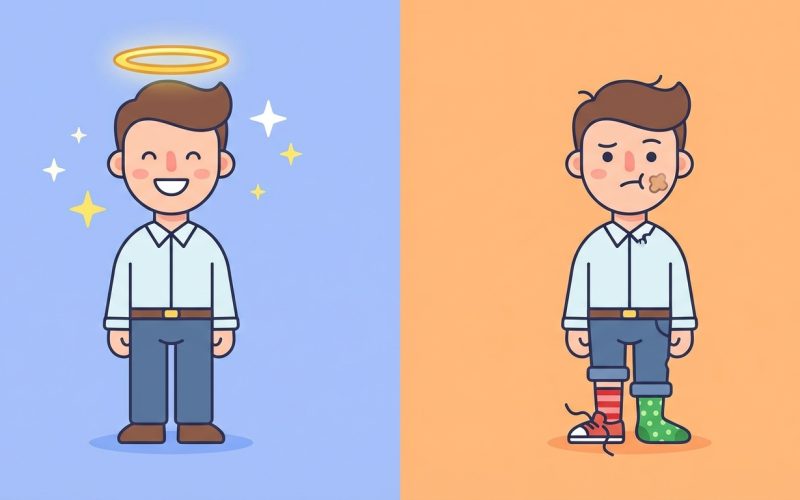
Remember “He’s a 10 but…”? The viral dating game where you’d rate someone’s attractiveness and then drop a dealbreaker? It dominated 2022, faded, and now it’s back — evolved, expanded, and more unhinged than ever. Welcome to “They’re Perfect But…”
The Brief
“They’re Perfect But” takes the original format and removes the numerical rating entirely. Instead of scoring someone 1-10, you simply declare them “perfect” — then hit with an increasingly absurd, hyper-specific flaw. The comedy lives in the gap between perfection and the dealbreaker.
How it started
The format resurfaced on TikTok and Twitter/X in early 2026, likely as a natural evolution of the rating game. By removing the number, the new version feels more inclusive and less judgmental — the focus shifts entirely to the comedic flaw rather than ranking attractiveness.
The shift to “they” also broadens the game beyond heteronormative framing, which resonates with Gen Z’s approach to gender and dating discourse.
Why it resonates
- Absurdity over judgment: The flaws aren’t real dealbreakers — they’re bizarre hypotheticals. “They’re perfect but they narrate their own life in third person.” “They’re perfect but they clap when the plane lands.”
- Infinite remix potential: Any niche interest, pet peeve, or random observation becomes content.
- Comment section gold: The real entertainment is in the replies, where people debate whether the flaw is actually acceptable.
Formats you’ll see
- Text posts: Simple “They’re perfect but [flaw]” tweets/captions
- Duet chains: TikTok creators react to each other’s flaws in escalating absurdity
- Slideshow debates: Instagram carousels listing flaws and asking followers to vote dealbreaker or not
- Niche editions: “They’re perfect but” for gamers, book lovers, gym bros, etc.
Reading the vibe
What makes “They’re Perfect But” work in 2026 is that it’s gentler than its predecessor. There’s no “she’s a 4” energy here — everyone starts at perfect. The humor comes from imagining coexistence with someone’s weirdest trait, not from tearing people down.
It’s less “would you date them?” and more “could you live with this very specific thing?”
Bottom line
The meme is a mirror for what we find endearing versus unbearable — and the line is different for everyone. That’s the fun. It’s low-effort, high-engagement, and endlessly adaptable. Expect it to stick around for a while.