
What Does Chronically Online Mean? The Internet's Favorite Insult
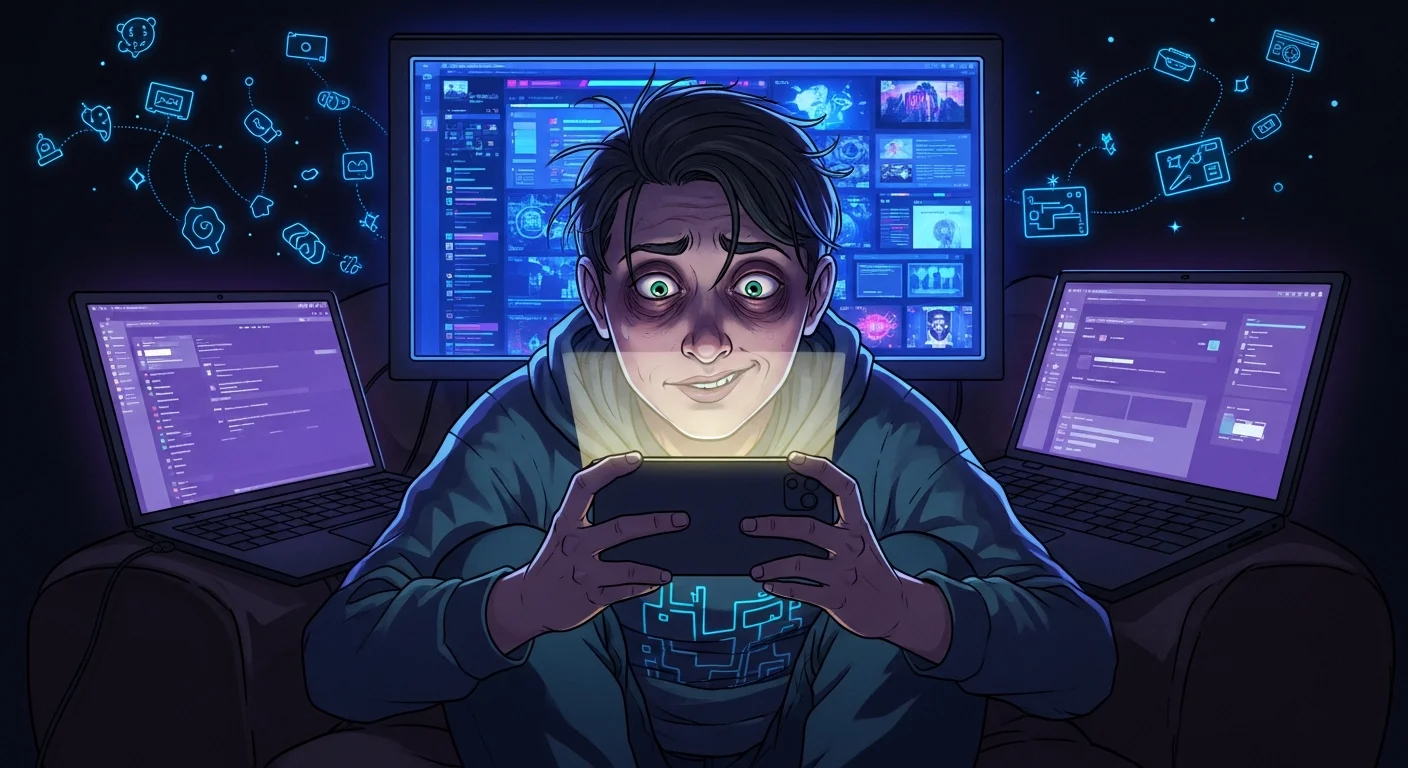
Chronically online describes someone who spends so much time on the internet that their worldview, vocabulary, and social skills have been shaped more by online discourse than by real-life interaction. If you have ever had to explain to someone that "most people do not know what that means" after they used a niche internet term in casual conversation, you have encountered a chronically online person. Or you are one.
What chronically online means
Meaning: Being so immersed in internet culture that you lose perspective on how normal, offline people think and communicate. Vibe: Part insult, part self-diagnosis. It is used to call out when someone's take only makes sense if you have been marinating in Twitter discourse for 12 hours straight.As a callout
"You think that is a normal opinion? You are chronically online."
"Only a chronically online person would get mad about this."
As self-awareness
"I understood every word of that tweet. I am chronically online."
"I just explained lore to my mom. I need to go outside."
Signs you might be chronically online
The term is not about screen time alone - it is about how deeply internet culture has replaced your frame of reference:- You use internet slang in real life and nobody around you knows what you mean. You say "that is giving" to your coworker and they stare blankly.
- You have opinions about discourse that most people have never heard of. You are heated about something 300 people on Twitter are arguing about.
- You assume everyone knows the context. You reference a meme from three days ago like it is common knowledge.
- Your worldview is shaped by feeds. You think certain debates are massive cultural moments when they are actually confined to one corner of the internet.
- You know the drama. All of it. Between people you have never met and never will.
Where the term came from
The phrase has been floating around since the early 2010s, but it gained serious traction around 2020-2021 when pandemic lockdowns pushed everyone's screen time to new extremes. Suddenly the gap between "online people" and "normal people" became impossible to ignore. Twitter (now X) was the primary breeding ground. The platform's real-time discourse culture made it easy to get sucked into arguments and worldviews that had zero relevance outside the app. When these perspectives leaked into mainstream conversations, "chronically online" became the shorthand for pointing out the disconnect.Chronically online vs terminally online
Both terms mean essentially the same thing, but terminally online carries a slightly heavier connotation - like it is too late for you, there is no coming back. "Chronically online" suggests an ongoing condition. "Terminally online" suggests the condition is fatal. Both are usually used with a mix of judgment and affection.The paradox of calling someone chronically online
Here is the thing: if you know enough internet culture to accurately call someone chronically online, you are probably chronically online yourself. The term is almost always thrown by people who are deeply embedded in the same spaces. It is the Spider-Man pointing at Spider-Man meme in verbal form.When to use "chronically online"
- Use it when someone's opinion only makes sense if you follow three layers of internet drama.
- Use it on yourself when you catch yourself thinking in tweets or explaining TikTok lore to confused friends.
- Do not use it to dismiss legitimate concerns just because they originated online. Some real issues surface on the internet first.
- Accept the irony - knowing what "chronically online" means is itself evidence of the condition.
TL;DR Chronically online means someone is so plugged into internet culture that they have lost touch with how offline people think and talk. It is part insult, part self-diagnosis, and the ultimate "go touch grass" for the discourse-poisoned. If you understood this entire article without looking anything up, you might be chronically online.